
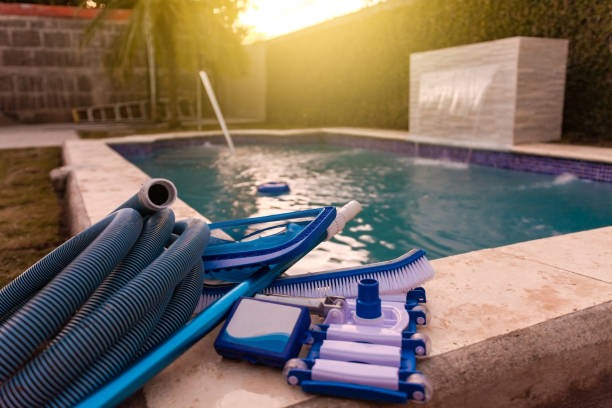

kipping pool filter maintenance feels harmless — until your water turns a shade of green you’ve only seen in horror movies. Most pool owners don’t think about the filter until something visibly goes wrong. By then, the damage is usually more expensive than a few minutes of monthly upkeep would have been.
Here’s what actually happens when you ignore it.
Your Water Starts Working Against You
The filter’s job is simple: trap debris, bacteria, and particles that your sanitizer can’t break down alone. When it gets clogged, water can’t move through it properly. Flow rate drops. Circulation slows. And stagnant water is basically an open invitation for algae.
It’s not a slow decline either. A neglected filter can push a pool from clear to cloudy in under a week during summer — especially if bather load is high or there’s been heavy rain. I’ve seen pools that looked fine on a Friday turn swampy by Tuesday because the filter hadn’t been touched in three weeks.
Cloudy water isn’t just ugly. It masks hazards. A child on the pool floor can become invisible from the surface when turbidity gets bad enough. That’s not a risk worth taking.
Your Pump Pays the Price
When the filter is packed solid with debris, the pump has to work harder to push water through. That extra strain shortens the motor’s lifespan — sometimes dramatically. Pump replacements typically run $300–$800 depending on size and brand. A filter cleaning takes 20 minutes.
The math isn’t complicated.
Pressure gauges tell the story clearly. Most filters run healthy between 8–15 PSI at startup. When you’re reading 25+ PSI consistently, the filter is telling you it’s done — and the pump is struggling to keep up. Ignore it long enough and you’ll get motor burnout, impeller damage, or a blown seal that floods your equipment pad.

Chemical Costs Go Up, Not Down
This one catches people off guard. A dirty filter doesn’t just fail to clean — it actively undermines your chemical balance. When circulation is poor, chlorine can’t distribute evenly. You end up with hot spots that are over-sanitized and dead zones where bacteria thrive.
To compensate, most pool owners just dump in more chemicals. Which costs more money. And still doesn’t solve the root problem.
Phosphate buildup is part of this too. Decomposing organic material — leaves, body oils, sunscreen residue — releases phosphates into the water. Phosphates are algae food. A clogged filter full of that organic matter becomes a phosphate factory sitting in your plumbing.
You can shock the pool all you want. If the filter’s not pulling its weight, you’re fighting uphill.
The Three Filter Types, and What Happens to Each One
Not all filters fail the same way. Sand, cartridge, and DE filters all have different failure modes when maintenance gets skipped.
Sand filters develop “channeling” — water finds paths of least resistance through the sand bed and stops filtering entirely, while the pressure gauge still reads normal. You won’t even know it’s happening until the water clouds up.
Cartridge filters are probably the most forgiving, but clogged cartridges tear. Once the pleated fabric develops rips or collapses, it’s not cleaning anything — it’s just sitting there. A replacement cartridge runs $50–$200. That’s what you’re gambling when you skip rinse cycles.
DE filters (diatomaceous earth) are high-performance but high-maintenance. Skip backwashing for too long and DE cakes inside the grids. Cleaning a DE filter that hasn’t been touched in months is a genuinely unpleasant job. I won’t pretend otherwise.
How Often Is “Regularly”?
It depends on your filter type, but here are reasonable baselines:
| Filter Type | Backwash/Clean Frequency | Full Service |
| Sand | Every 4–6 weeks (or when PSI rises 8–10 PSI above baseline) | Every 3–5 years (media replacement) |
| Cartridge | Every 2–6 weeks | Annually (deep clean or replace) |
| DE | Every 4–8 weeks | Annually (full disassembly + inspect) |
These ranges shift based on use. A pool getting daily use from a family of five needs more frequent attention than one used twice a week. Heavy pollen season or a big storm? Check the pressure the next day.
What “Regular Cleaning” Actually Looks Like
For most cartridge filter owners, it’s this: remove the cartridge, rinse it with a garden hose from top to bottom (not a pressure washer — too aggressive, damages the pleats), let it dry if you have a spare, reinstall.
That’s it. Twenty minutes, maybe less.
Once a season, break out a filter cleaning solution. Soak the cartridge overnight in a diluted cleaner to strip oils and mineral scale that a rinse won’t touch. It extends cartridge life by a year or more in most cases.
Sand filter owners just need to backwash — run water backwards through the tank until the sight glass runs clear, usually 2–3 minutes. Rinse cycle after. Done.
DE filters are more involved, but the backwash cycle itself takes about five minutes. Full grid cleaning once a year is the part that takes an afternoon and makes you appreciate simpler systems.
The Real Cost of Waiting
If a filter goes completely uncleaned long enough, here’s what you’re typically looking at:
- Green pool treatment: $150–$400 in chemicals plus labor, or 3–5 days of your own time
- Pump motor replacement: $300–$800
- Cartridge replacement (if torn): $50–$200
- DE grid replacement (if failed): $100–$400
- Pool replastering if algae staining is severe: $3,000–$10,000
Compare that to a $15 filter cleaner and a garden hose.
Nobody wants to deal with a green, swampy, pump-killing, chemically-imbalanced pool in the middle of July. Clean the filter.
One Last Thing
If you’ve bought a house with a pool and you don’t know when the filter was last serviced — assume it’s overdue. Pull the cartridge or run a backwash cycle before swimming season starts, check your baseline PSI, and set a phone reminder for 4–6 weeks out..